Insights · 7 min read
The first city on the Moon: an architect’s view of a place you cannot step outside
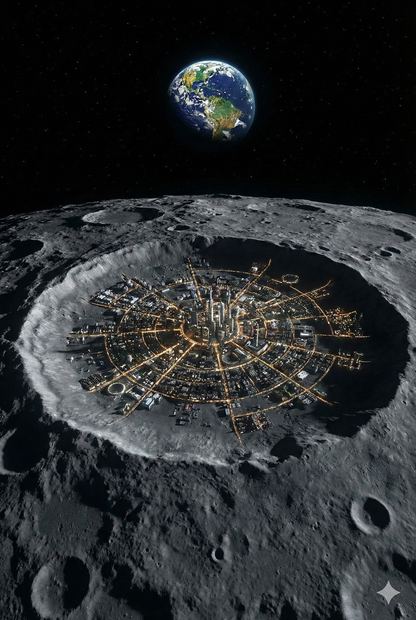
LUNA NOVA is a concept study by Dmytro Shakal and the TVORZI team. Not about rockets — about what turns a station into a city.
Every problem an architect works with on Earth exists on the Moon in its extreme form. No air, no shade, no soil, no way to walk out of the building. Strip a project down to that and what remains is the actual question of the profession: what does a person need in order to stay a person in a place that was not built for them.
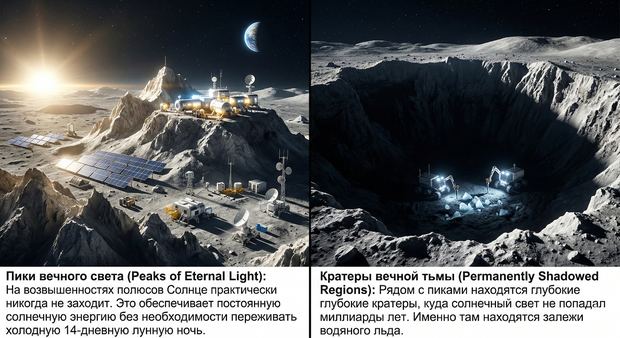
Location decides everything. The concept sites the city at the lunar south pole, near Shackleton crater — the ‘peaks of eternal light’, ridges that stay almost permanently sunlit and so avoid the fourteen-day lunar night. Next to them lie permanently shadowed regions holding water ice. An alternative option is the lava tubes near the Marius Hills, where the roof of the tube does the shielding.
Material comes from the ground. The principle is ISRU — in-situ resource utilisation: bring only the complex electronics from Earth. Lunar regolith is roughly 40–45% oxygen by mass, extractable by molten regolith electrolysis or by hydrogen reduction of ilmenite, with aluminium, iron and titanium as by-products. NASA has been developing both routes for years.
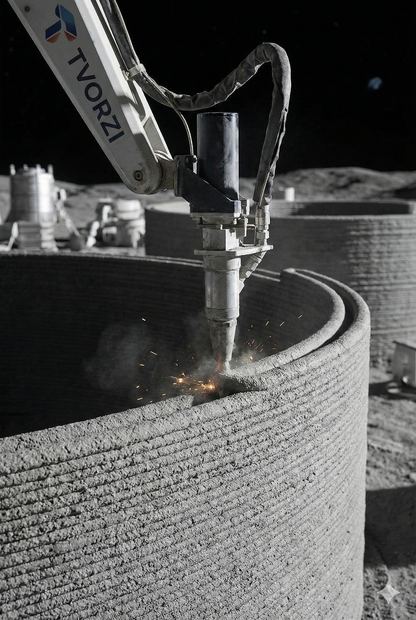
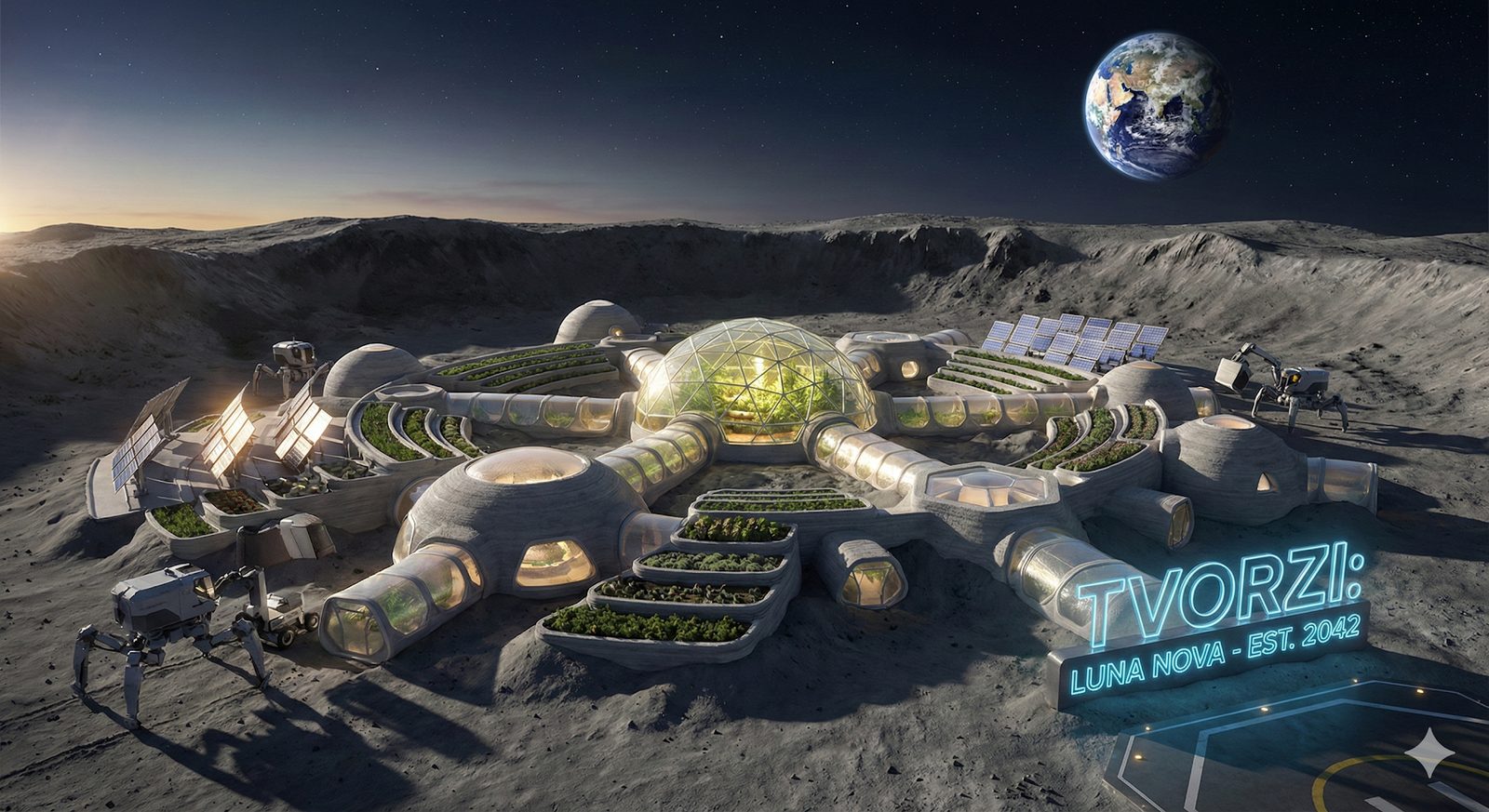
Construction is robotic and comes first. Swarms of machines sinter regolith and 3D-print domes and walls by contour crafting, growing the settlement in hexagonal modules. People arrive to finished volumes, not to a building site — there is no other way when every hour outside costs life support.
Protection is mass. Two to five metres of regolith over the structure stop radiation and micrometeorites; inside sit inflatable modules that hold the pressure. The city is buried by design, which is exactly why the interior has to work so hard.
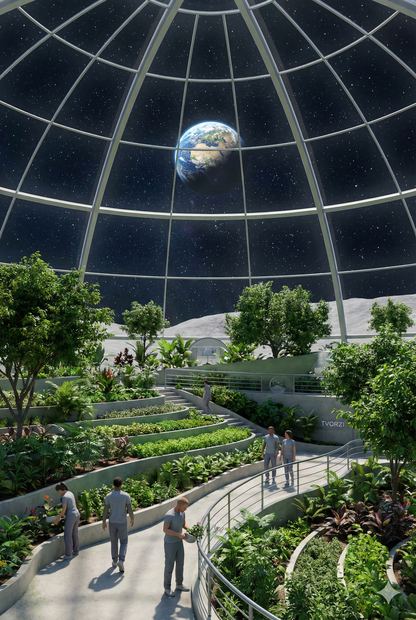
Zoning runs in rings. The technical ring on the outside — solar farms, landing pads, regolith processing. Hydroponics in the middle. Housing, laboratories and rest at the core, at maximum depth. The most protected place in the settlement is the one where people sleep.
The loop has to close. Life support is designed for 98–100% recovery: water regenerated from every source, CO₂ removed biologically or by zeolite filters, biomass composted. Nothing leaves the system, because nothing can be resupplied cheaply.
There is an economy behind it. The study proposes life-support units leased on ninety-nine-year terms with quotas on oxygen, water and power; investment funds holding polar energy derivatives and ISRU patent pools; tourism for a tiny fraction of Earth’s population. The steadiest business is the dullest one — a shipyard and a filling station: lifting a tonne of water out of lunar gravity is far cheaper than lifting it off Earth.
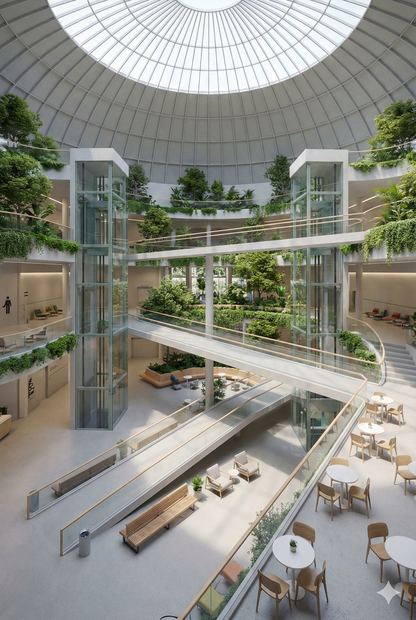
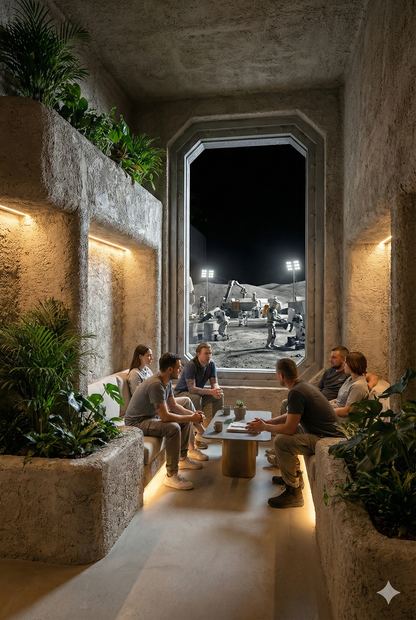
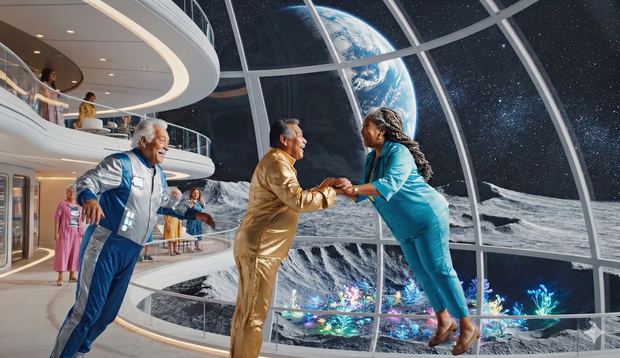
So where is the architecture in this. In three things. Psychological resilience — a person confined in a buried volume for months needs varied space, daylight rhythm and distance. Ergonomics at one sixth of Earth gravity — stairs, handrails, furniture and storage all change. And humanising the machine: a technical object has to read as a place, or people will not stay.
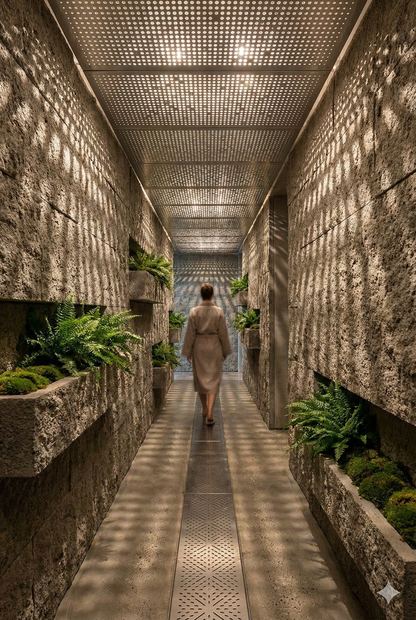
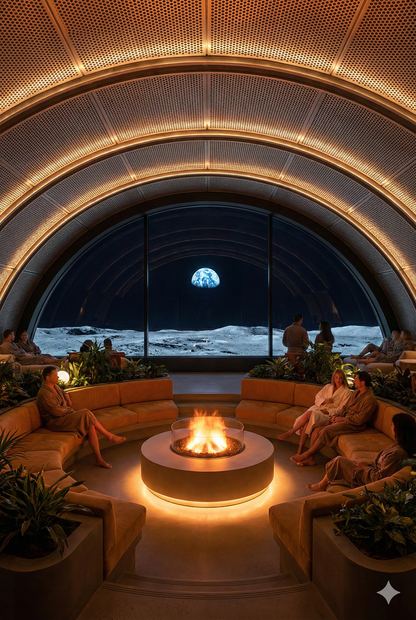
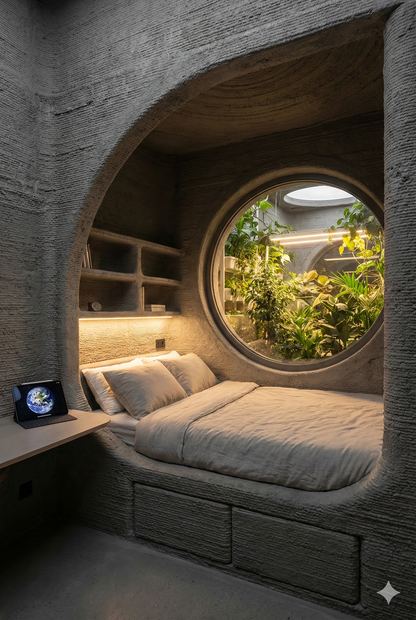
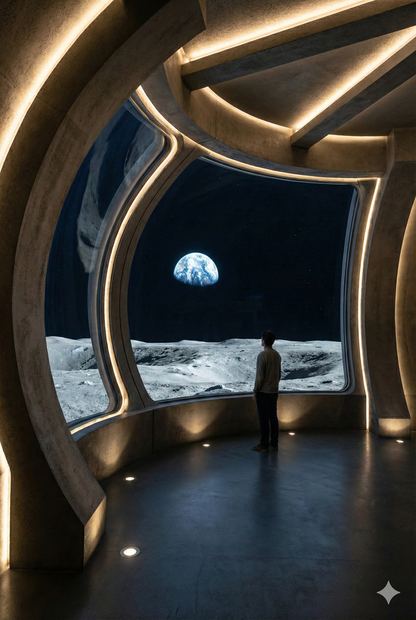
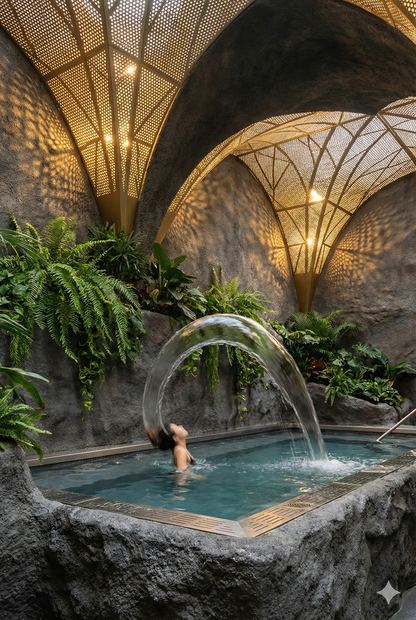
The visual language the study proposes is ‘lunar brutalism’: sintered regolith as the base material, deep chiaroscuro from hard unfiltered light, biophilia wherever plants can be grown, and one uncompromising element — a window onto Earth. The spa concept Aeterna is built entirely around that view.
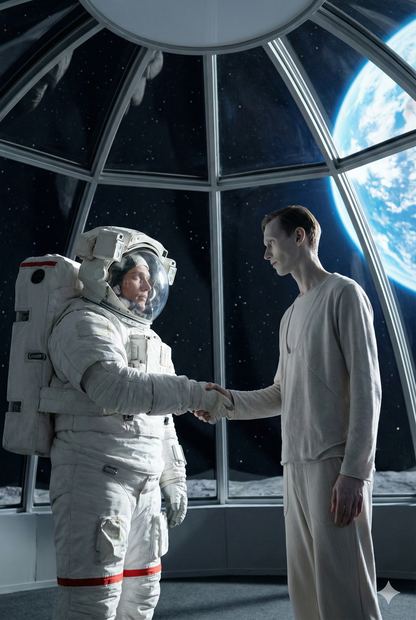
The practical part of the study is a universal lunar design standard: handrails in every wall, steps taller but wider than terrestrial ones, gentle ramps, rounded corners, resilient floors of foamed polymer recycled on site, and ergonomics sized for taller second-generation residents. The conclusion is deliberately unglamorous — what works is not a high-tech bunker but an advanced, very safe sanatorium.
A note on status. This is a concept study and an essay, not a commissioned project: there is no client, no brief and no built area. The geology, chemistry and life-support figures follow published NASA and ESA work on lunar ISRU and the south-pole sites. The passages on physiology, lifespan and a second generation of lunar-born residents are the author’s speculation and are offered as such. Visuals are concept imagery.