Engineering & extreme conditions · Concept
AURORA VANGUARD — mobile polar station
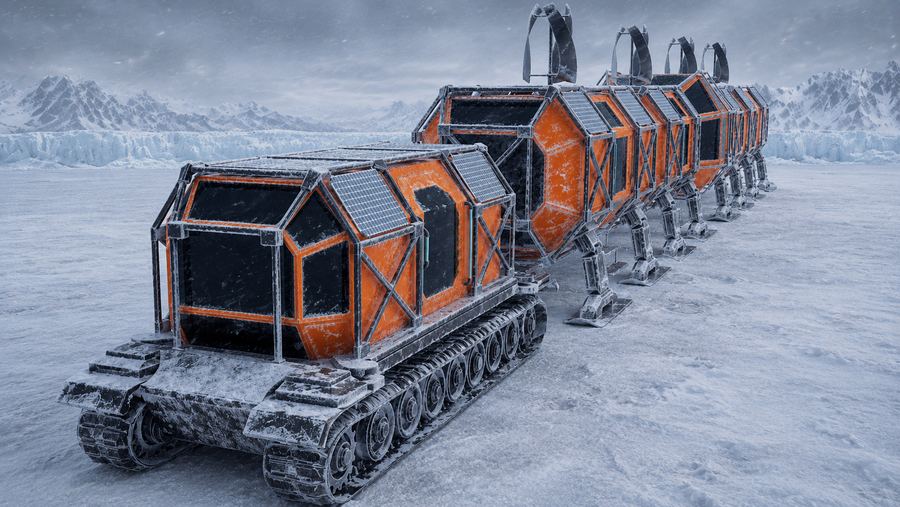
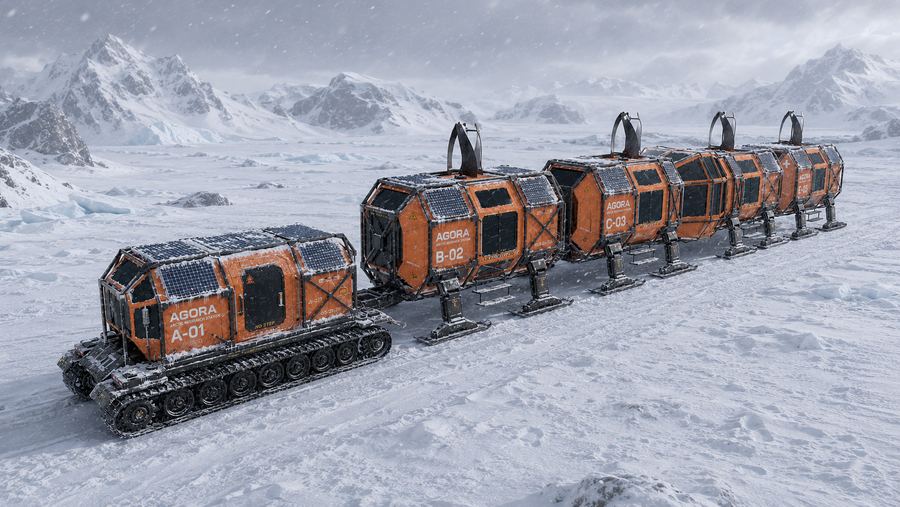
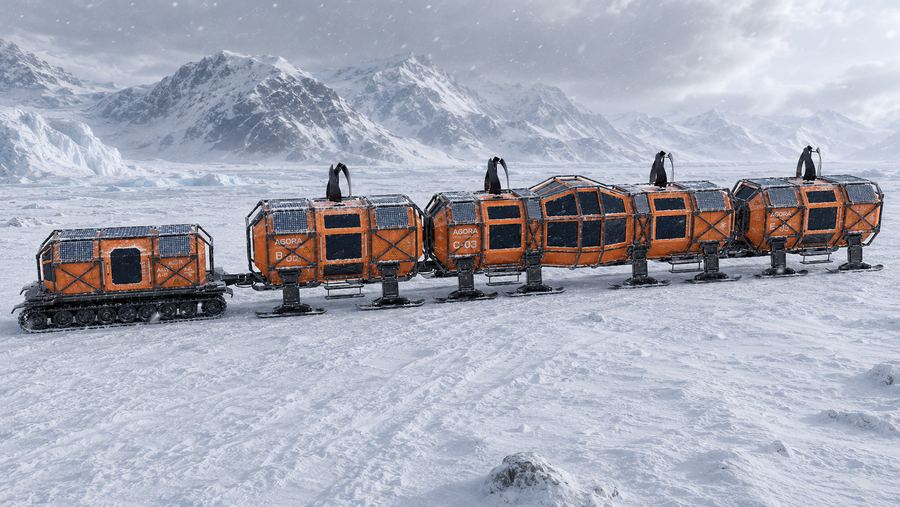
A research station that moves. Eight modules on hydraulic ski platforms are towed as a single convoy, so a crew of twelve can change its area of study without dismantling the base. Hybrid power cuts fuel logistics by 90–95 % against a diesel station.
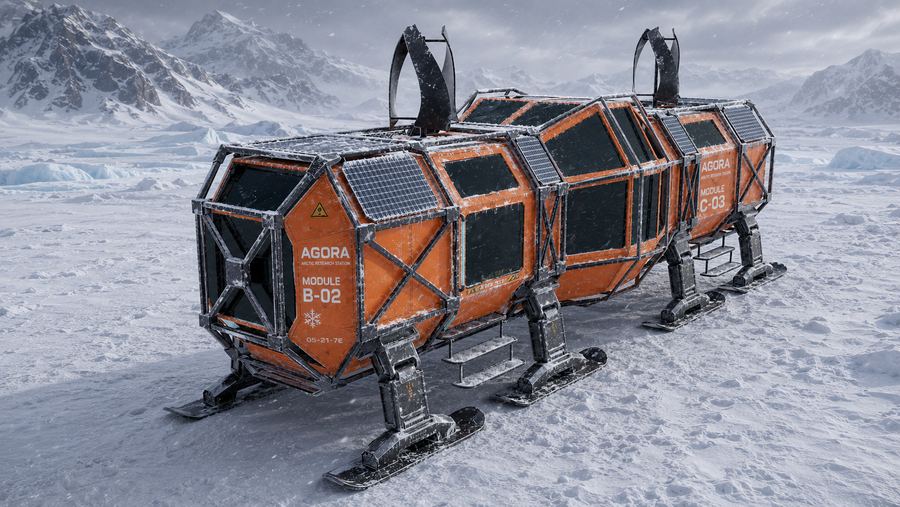
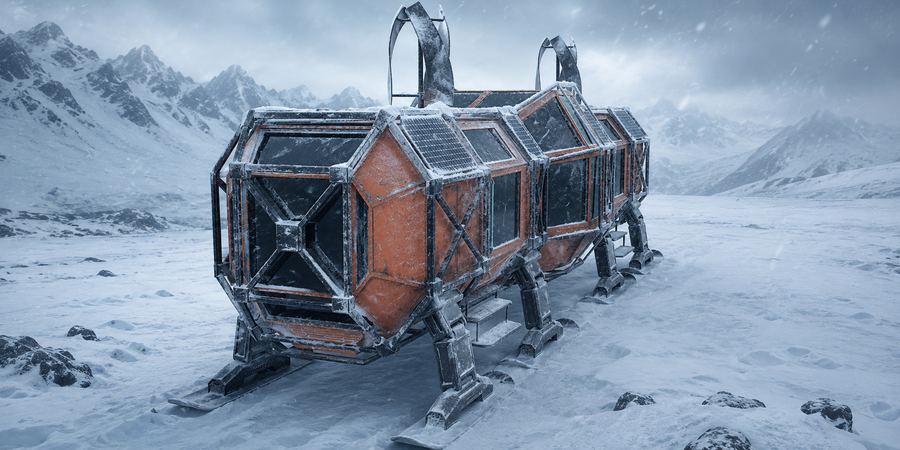
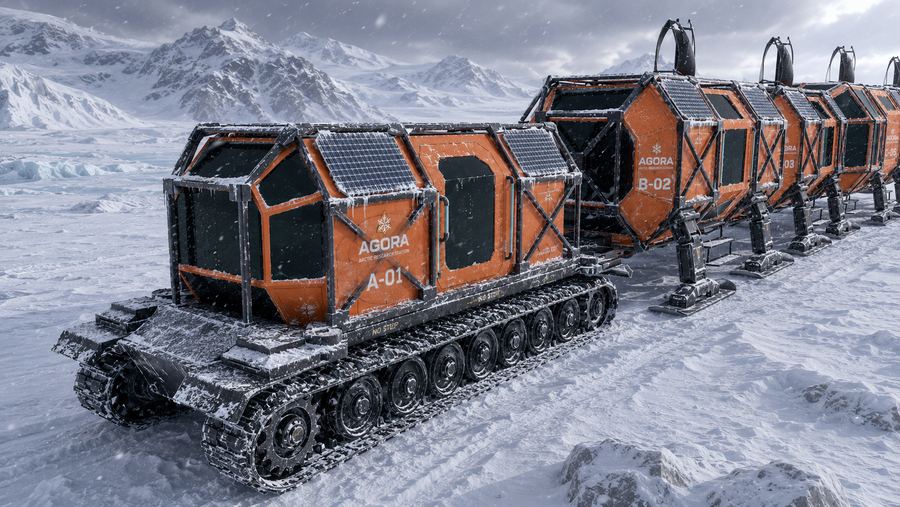
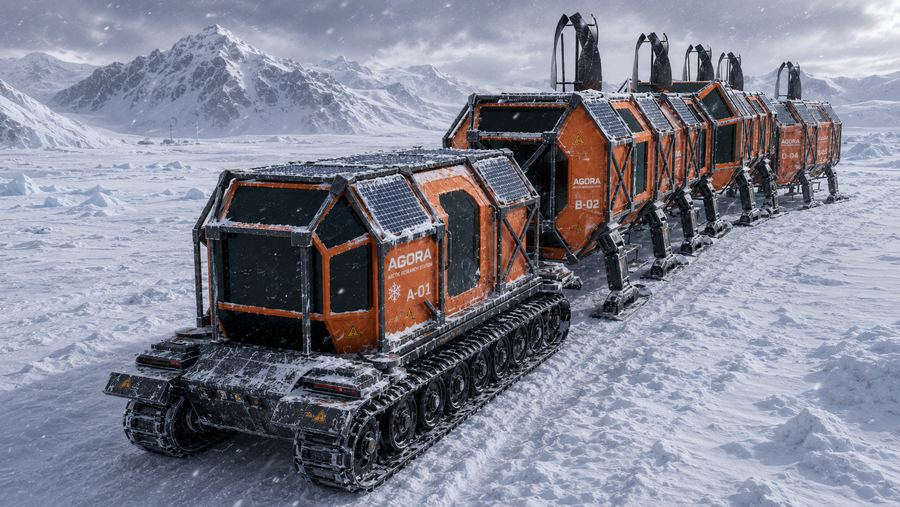
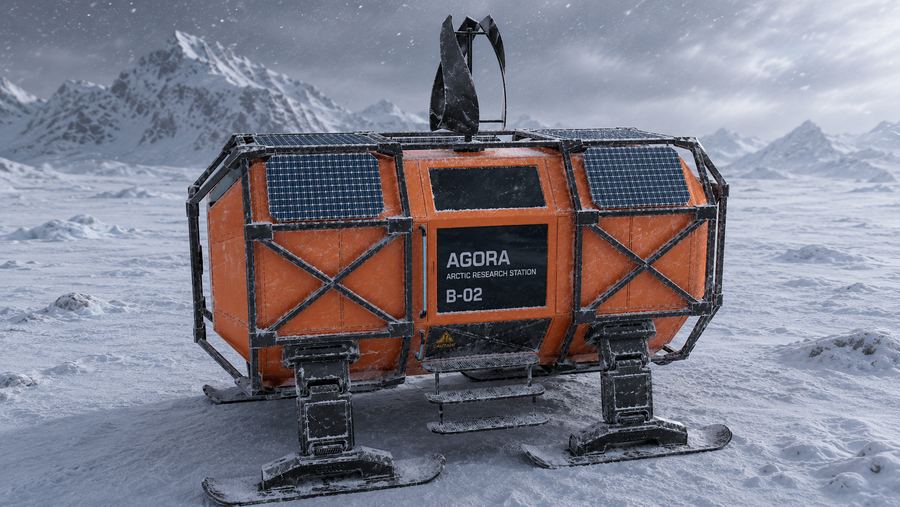
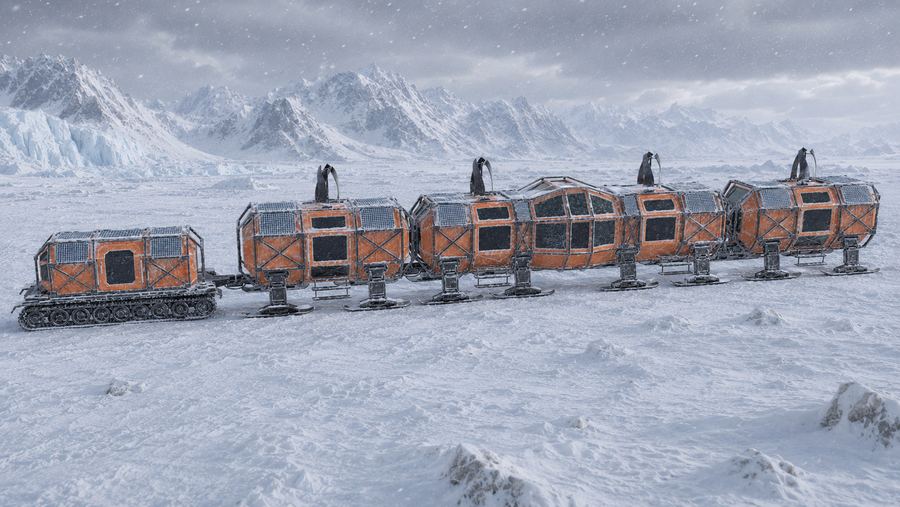
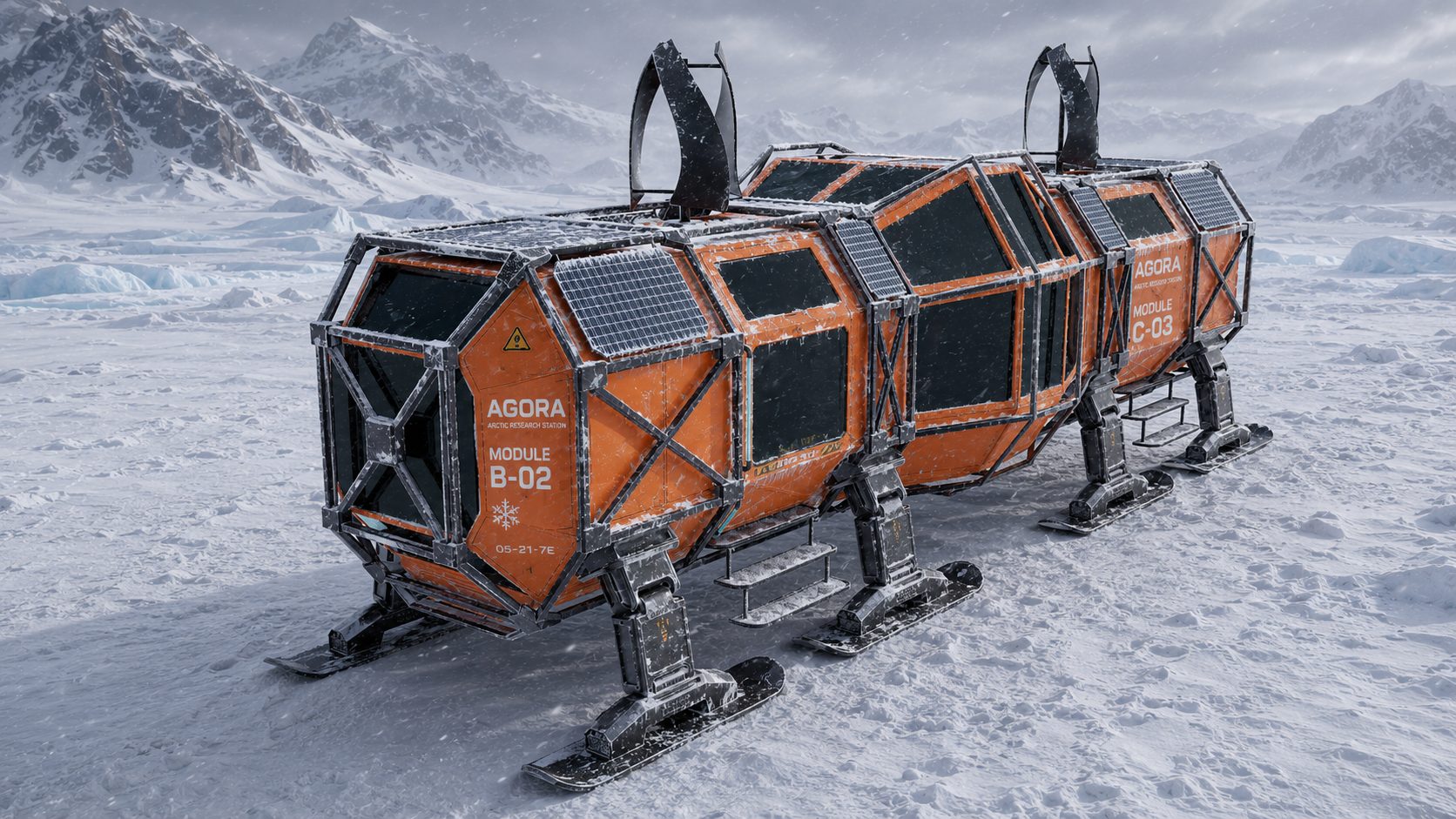
Traditional polar bases are fixed: where they were built is where the science stays, and every litre of fuel arrives by ship or convoy. AURORA VANGUARD turns the station into a transportable asset. Each module sits on hydraulic ski supports that lift it clear of drifting snow; before a move the hydraulics drop the modules into transport mode and a multi-track polar vehicle tows the complex hundreds of kilometres as one train. Relocation happens in the summer window, autonomous stationary operation through the winter.
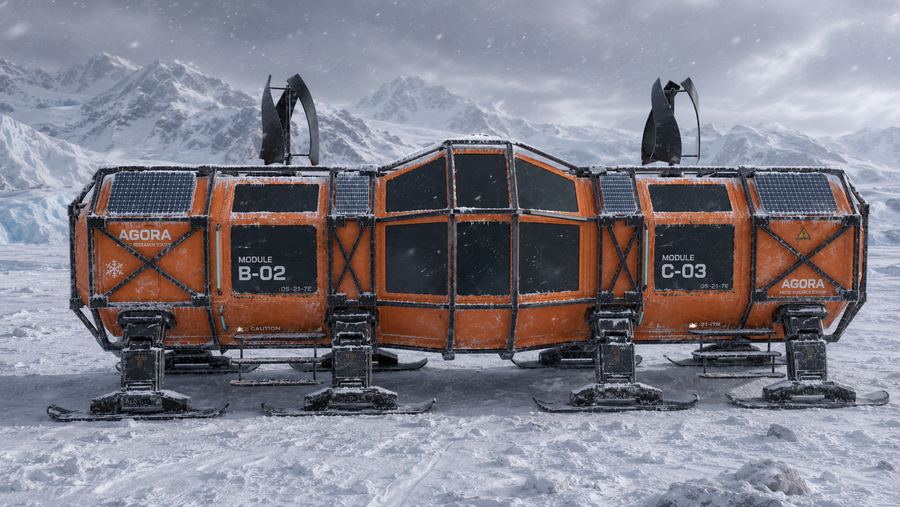
Eight modules carry the whole programme — power plant and garage, wet laboratories, galley and dining, central hub with a greenhouse, three residential blocks, dry laboratories and server room. In transport mode every part fits the ISO High Cube envelope, so the station travels in standard 40-foot containers by sea, air or land. Once positioned, hydraulic slide-out sections expand the usable floor area; mechanical locks and a multi-layer seal keep the thermal envelope continuous.
Energy is the heart of the engineering. Nine helical vertical-axis wind turbines of 15 kW each, bifacial panels mounted vertically on the facades to catch low Arctic sun and light reflected off the snow, 2.5–3.0 MWh of battery storage and a hydrogen generator in reserve. Average load 41.8 kW, peak 138.5 kW, up to 72 hours fully autonomous. Waste heat from the servers and batteries — 10–12 kW — is recovered into the heating loop. Water runs a partially closed loop: 1,240 L/day in circulation, up to 1,000 L/day recovered by membrane bioreactor, up to 400 L/day produced from melted snow.
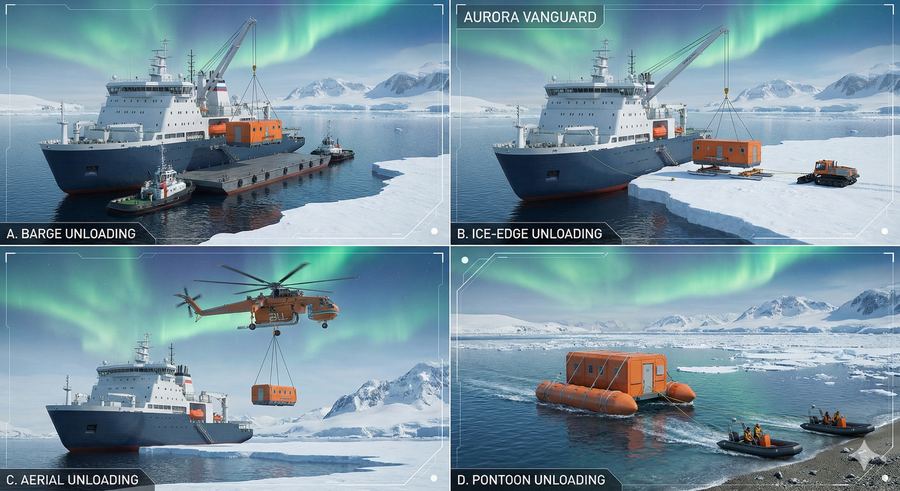
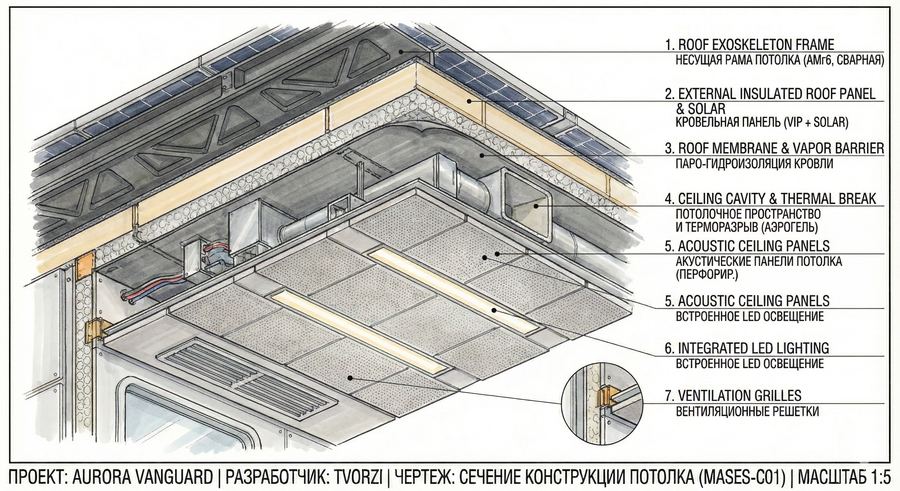
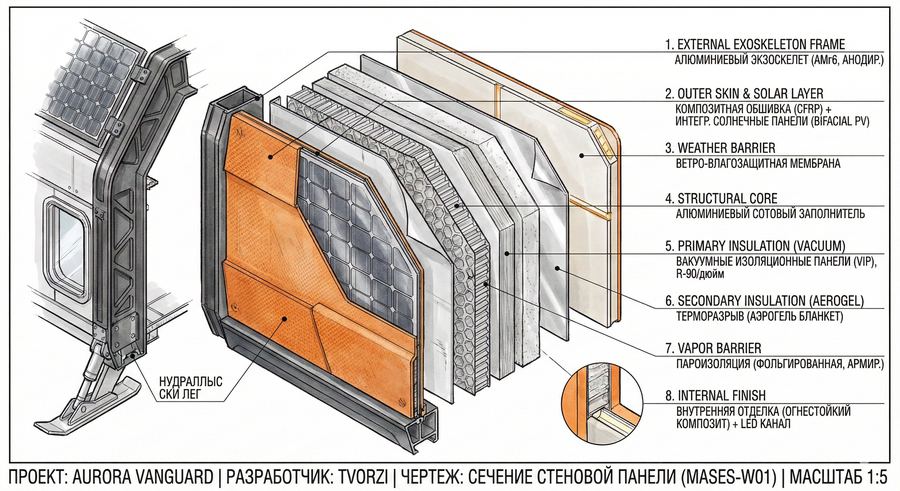
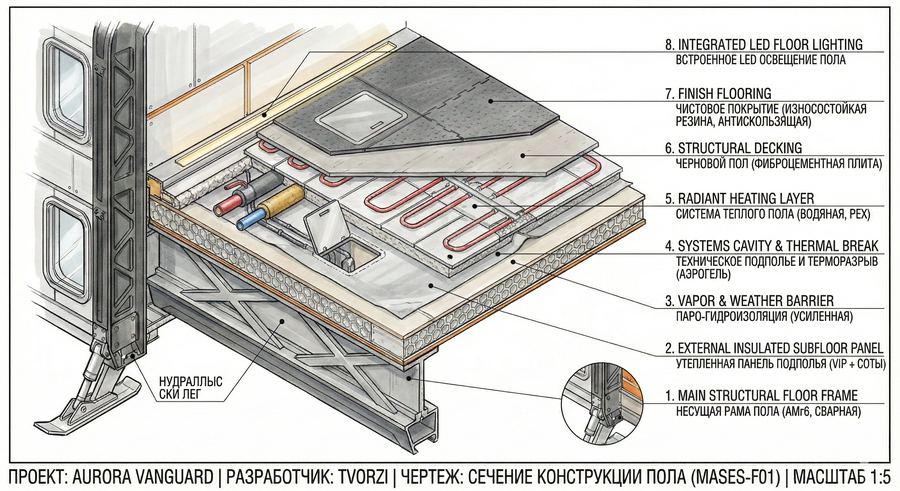
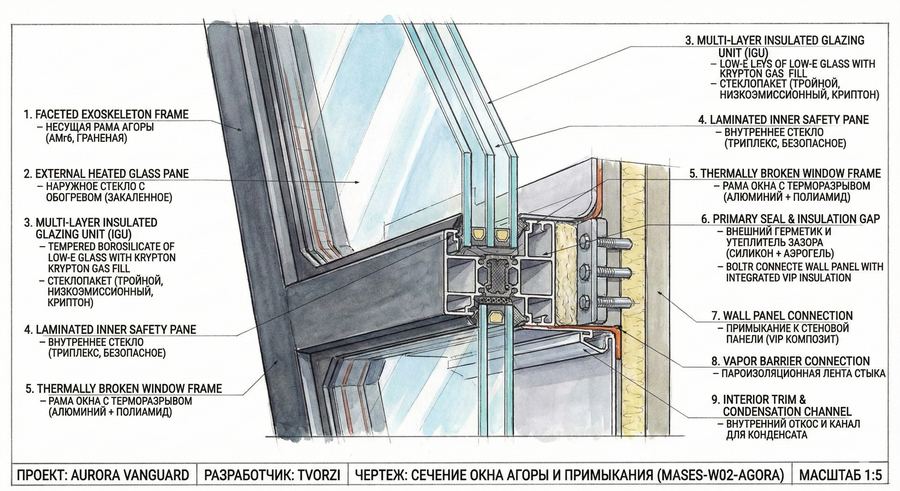
The envelope is an exposed exoskeleton of aerospace-grade anodised aluminium tying roof, walls and ski supports into one frame, with CFRP composite panels, vacuum insulated panels and aerogel behind it. Indoor temperature holds at +20 °C with −50 °C outside. Three deployment methods are worked out for coasts with no port: landing craft, heavy-lift helicopter, or detachable pontoons.
The economics are the argument. Capital cost is around USD 11.7 million against a cheaper conventional diesel station — but logistics, not fuel, is the real cost driver in polar operations, and cutting fuel deliveries by 90–95 % changes the lifetime picture. Service life above 30 years against 15–20, and at the end the station is removed rather than abandoned.
Gallery